 ActiveTiggerActiveTigger
ActiveTigger is an open-source web tool for collaborative corpus annotation and classification. Built by and for computational social scientists, it handles text as well as images.
Upload a corpus, define your categories, annotate — and let active learning, fine-tuned encoder models, or generative AI do the heavy lifting when you want them.
It is constantly developed by researchers at CSS@IP-Paris (CREST) and used daily in ongoing research projects.
We host an online instance at CREST — researchers can request an account to try it.
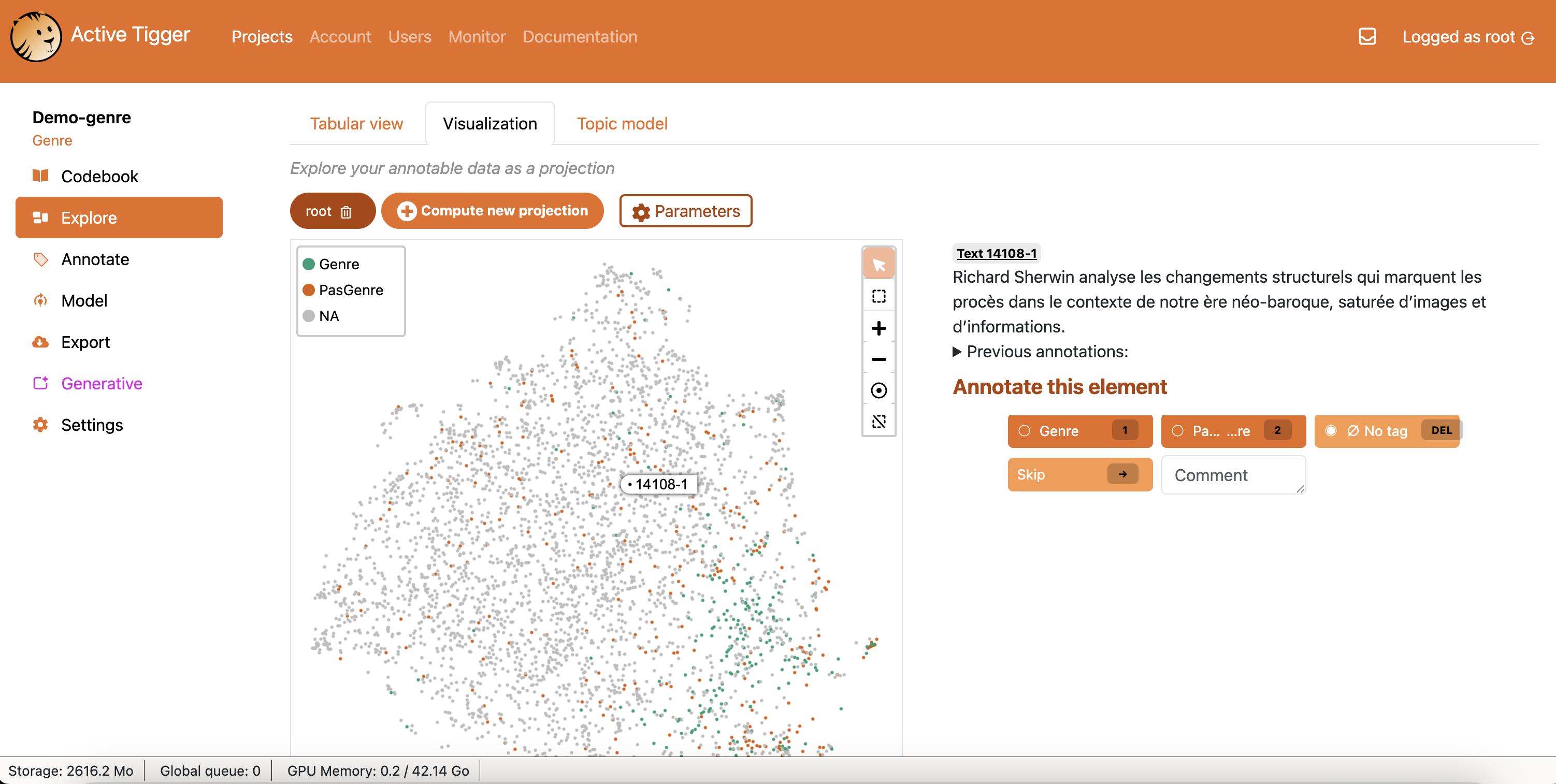
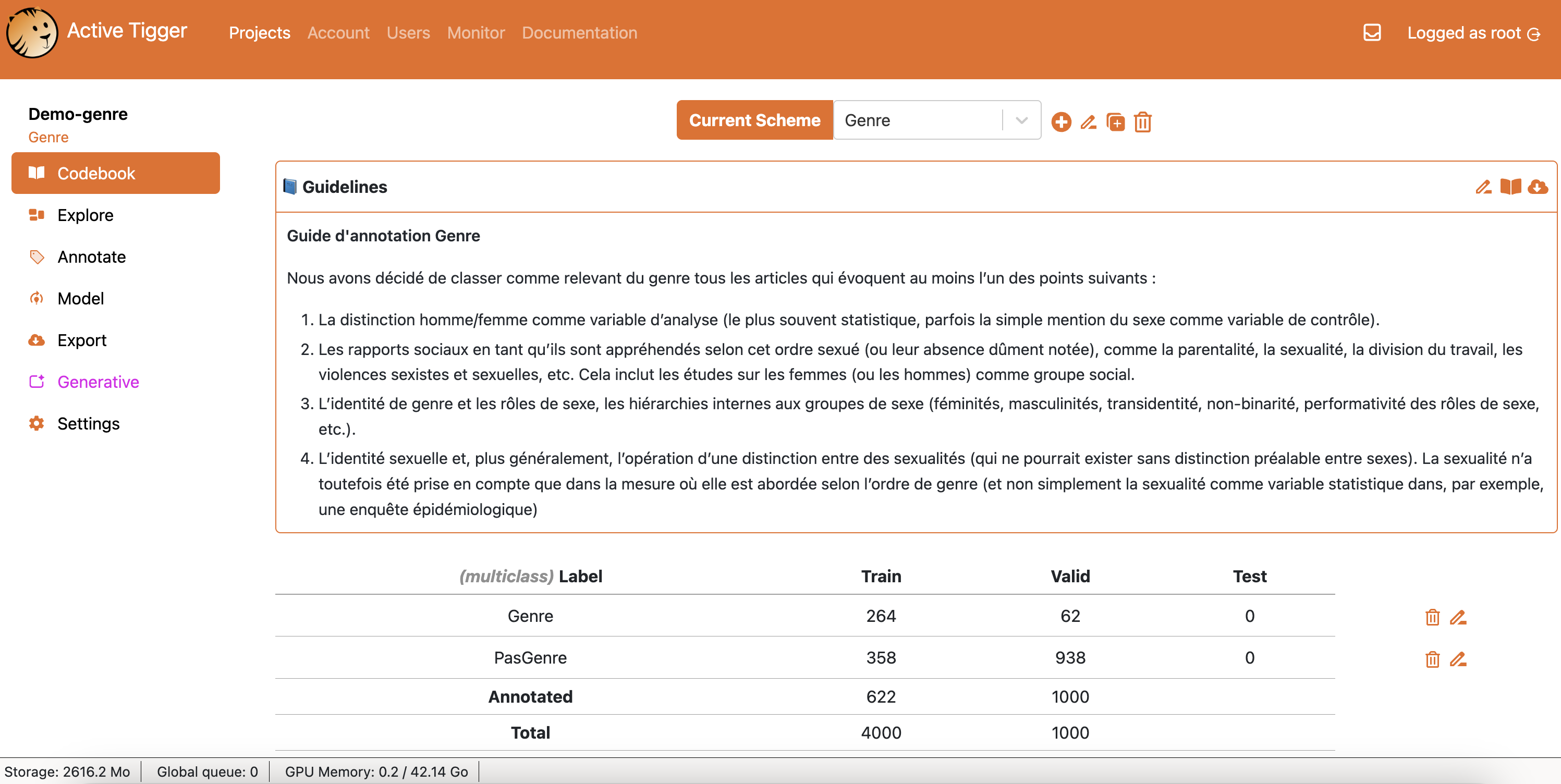
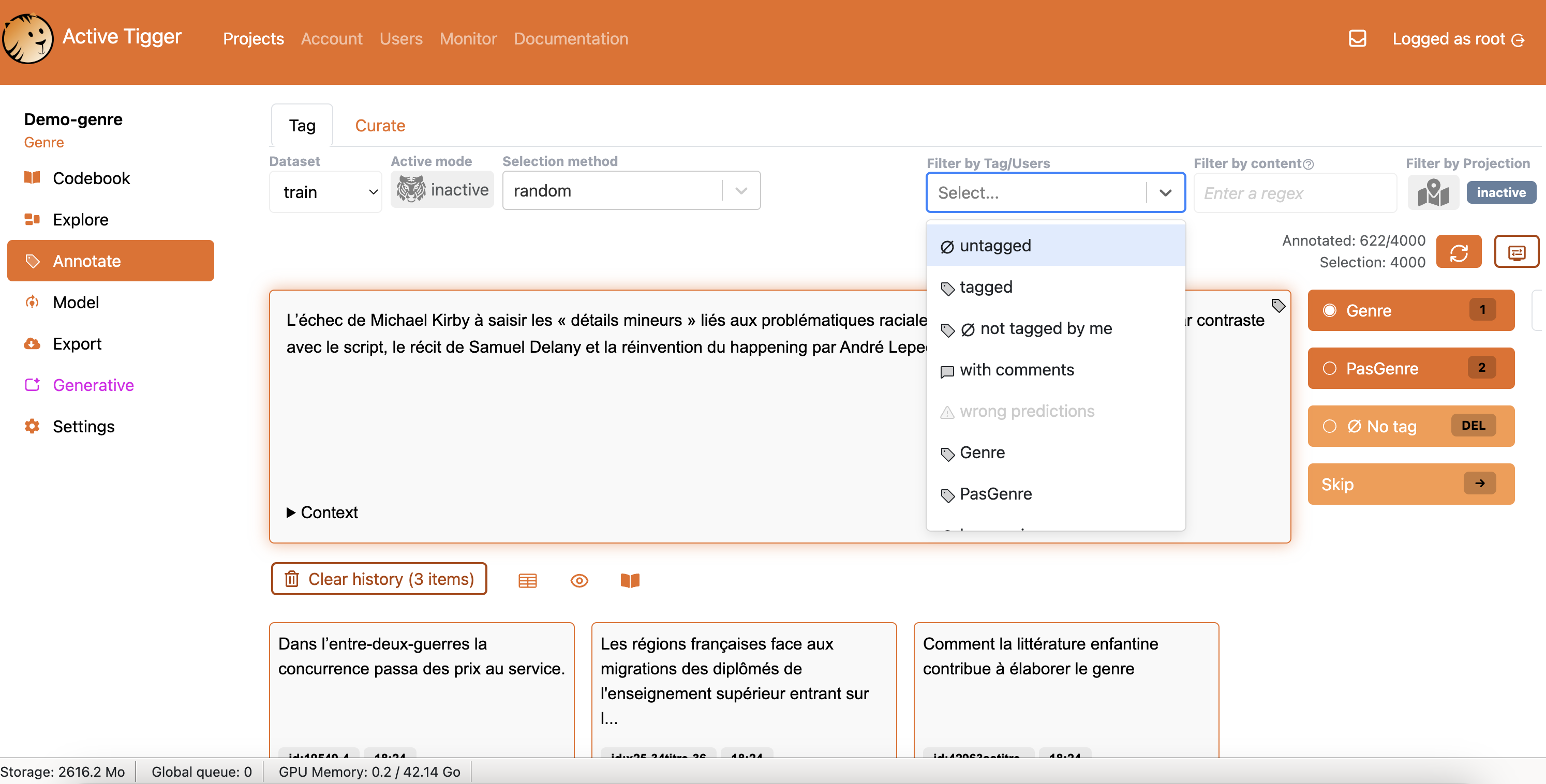
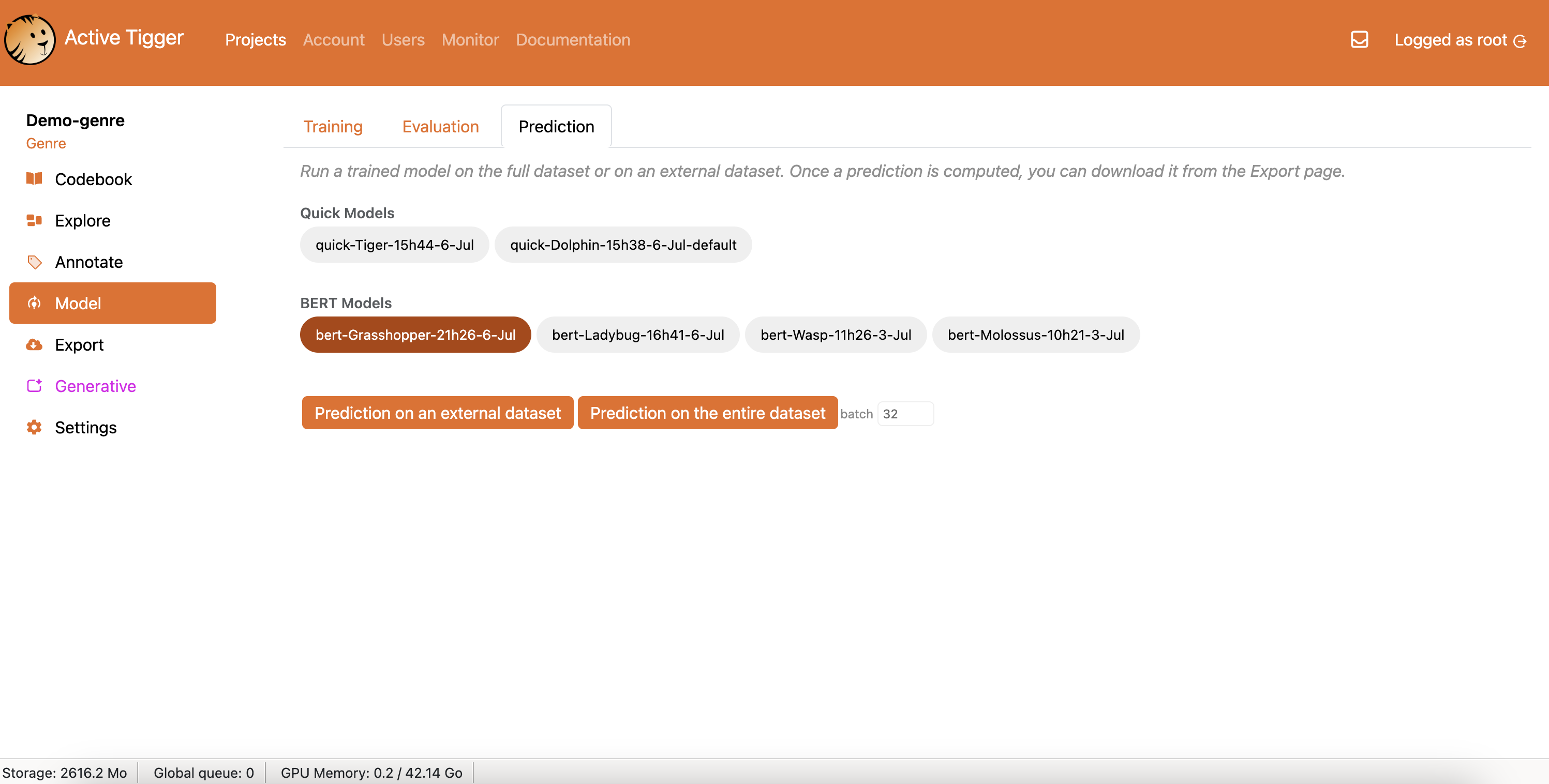
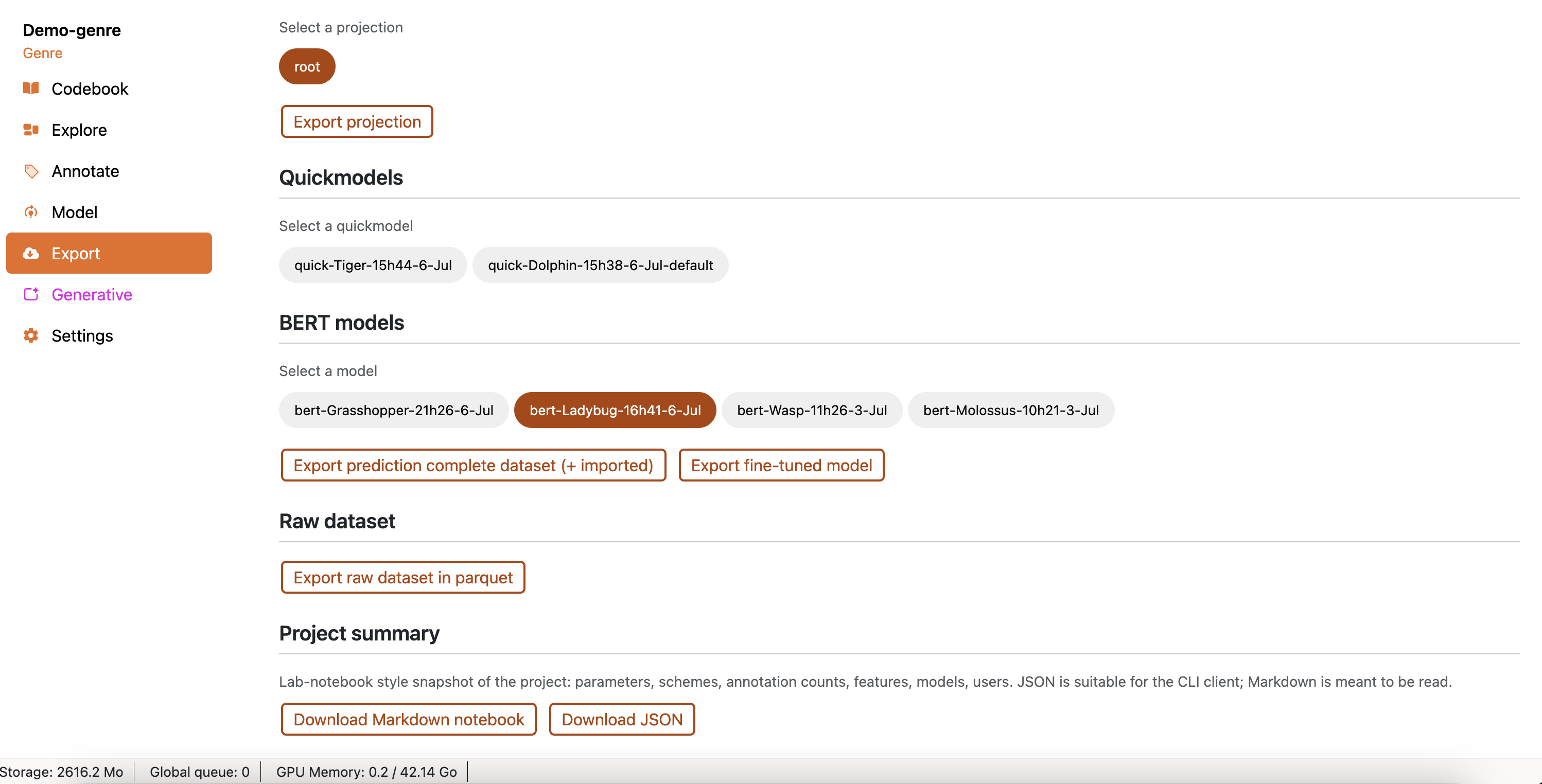
With ActiveTigger, scholars across the world develop and stabilize codebooks, build training datasets, classify large corpora, and extract information. It is designed to facilitate iterative, reflexive coding. It has been tested on corpora of hundreds of thousands of documents.
Multilingual models are supported.
Because ActiveTigger is open source, you can run your own instance on your own infrastructure when working with sensitive data. No vendor, no data harvesting, no lock-in.
ActiveTigger is developed at the CREST research unit (CNRS, Évole Polytechnique, ENSAE) by the CSS@IP-Paris team, with the support of OuestWare. It is a complete rewrite of the original R Shiny app by Julien Boelaert and Étienne Ollion. The name is a pun on the similarity between "Tagger" and "Tiger".
We aim to keep the application lightweight, resource-efficient and open source, and to make computational social science methods accessible to communities beyond programmers. The project was supported by DRARI Île-de-France, Progedo, CREST.
If you use ActiveTigger in your research, please cite the companion article (available in the JADT 2026 proceedings):
Schultz, E., Boelaert, J., Morin, A., Bonutti D'Agostini, E., Claesson, A., Chatelain, A., & Ollion, É. (2026). ActiveTigger: An open source collaborative text annotation software for computational social sciences. In Proceedings of the 18th International Conference on Statistical Analysis of Textual Data (JADT 2026), Palermo, Italy, July 8–10, 2026.